
How a Single Frame Takes Hold of You
Have you ever been watching a film and found yourself crying without quite knowing why? There was no line of dialogue, the music had not yet come in. There was only a face, lit in a certain way, framed from a certain angle. And something inside you broke.
That moment of breaking is the signature of cinematography. A film's visual language does not simply accompany the screenwriter's words or the actor's performance. It builds them, undermines them, and sometimes dismantles them entirely.
To talk about cinematography is to talk about why cinema is such a powerful art form. In this piece, we will discuss how that power works, what tools visual storytelling uses, and why some frames still occupy a corner of your mind a decade later.
Light and Shadow: The Real Screenplay
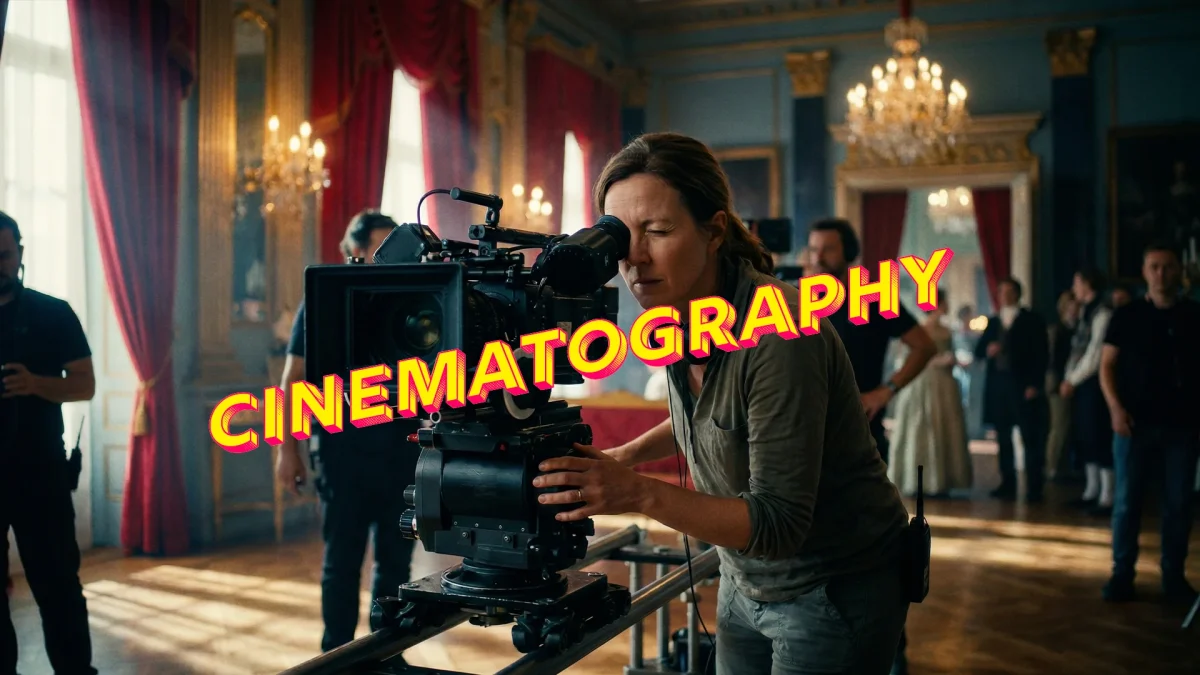
The Director of Photography, or DP for short, is the invisible author of a film. While the director decides what is told, the DP decides how it will feel. And that "how" is, more often than not, everything.
Light is the most fundamental tool of cinematography. But when we talk about light, we are not talking about the number of bulbs or wattage values. Chiaroscuro, the dramatic tension between light and shadow, is the oldest method of conveying a character's inner world without words. When half a face is left in darkness, the viewer already feels something about that character they do not yet consciously know.
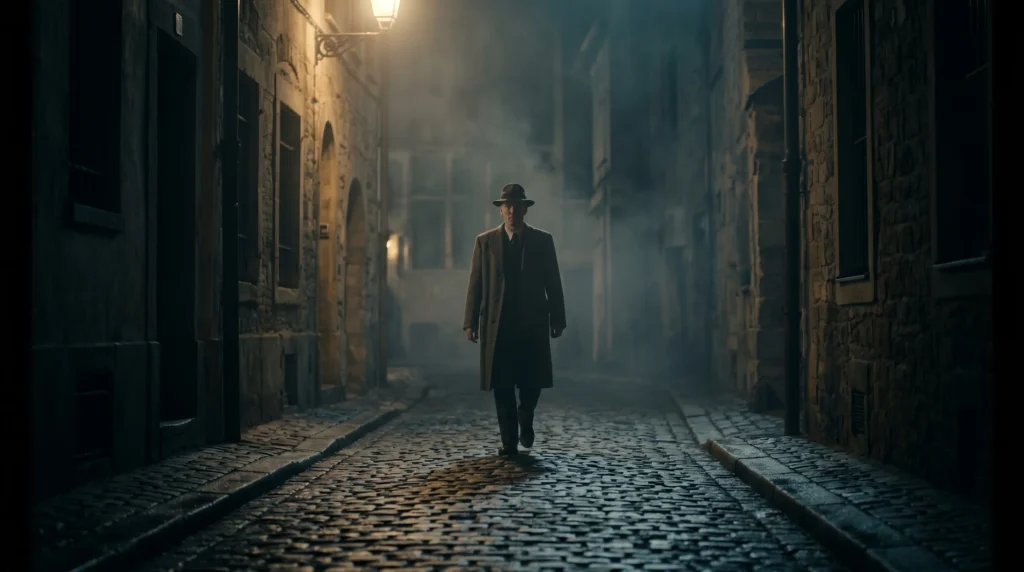
By contrast, flat and hard illumination, known as high-key lighting, leaves the character exposed. There is no shadow to hide in. Think of any scene of tension. The moment the camera harshly floods a face with light, it tells you that character has nowhere left to run. No dialogue required.
Camera Movement: Cinema as Body Language
When talking about camera movement, let us be clear about one thing: every movement carries an emotion. A camera that does not move carries one too, but what it carries in that case is the stillness itself.
A slow dolly-in, the camera quietly advancing toward a character's face, tells the viewer: "pay attention, this moment matters." But perform that same approach quickly and you get the crash zoom effect, and the message becomes anxiety, panic, or irony. Same movement, same direction, different speed. A completely different emotion.
Steadicam shots attach the camera to the human body and produce that strange sensation of walking alongside someone. A long tracking shot guides the viewer through a labyrinth. There is no cut, no breath, no escape. Stanley Kubrick used this effect to build the dread of a hotel, and those frames became part of cinema history. Because a technical device had been transformed into an emotional reality.
Color Palette: Saying What Goes Unsaid
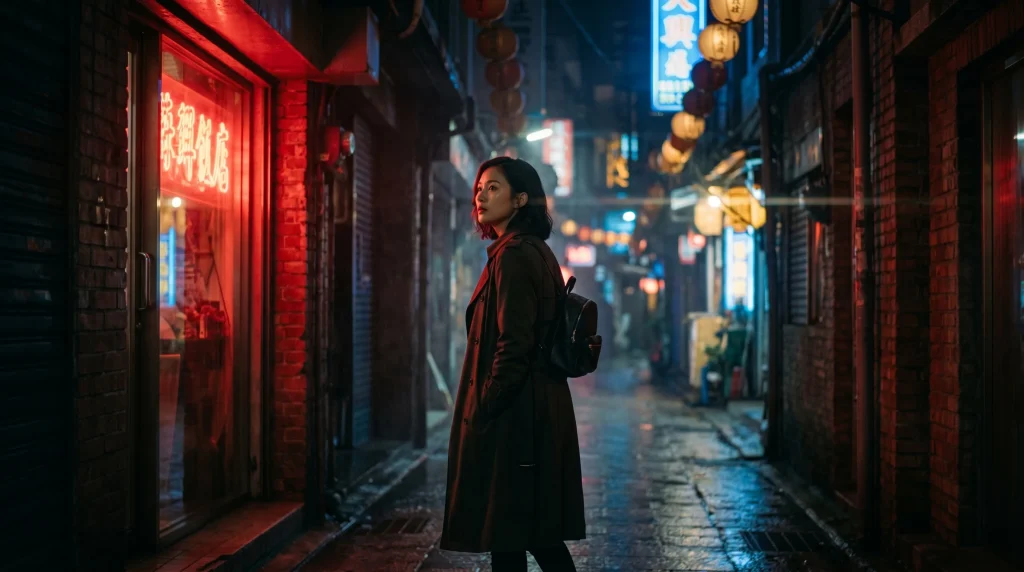
Color theory in cinematography is less a rulebook and more a guide to feeling. Cool blue tones evoke loneliness, distance, and suspicion. Warm amber and orange tones carry intimacy, trust, and nostalgic longing.
But a skilled director of photography does not simply use these clichés. They play with them, they break them. When a scene is meant to feel warm but is kept visually cold, a difficult-to-describe unease stirs in the viewer. That character looks happy, but something is wrong. Color whispers to the audience what the screenplay does not say.
It is no accident that digital color grading has grown so important. Today, a film's color tone is carefully shaped in post-production after shooting is complete. The gray tones of an image, the warmth of skin, the saturation of the sky. All of these are conscious decisions. There is no coincidence in those colors.
Framing: Every Empty Space Is a Choice
What remains unseen within a frame is as much a part of the narrative as what is shown. Negative space, the emptiness surrounding a character, physically renders that character's solitude or lostness within the world.
If a character is pushed into the lower right corner of the frame, all that empty space above and to the left becomes a concrete expression of their smallness, their sense of being crushed. You do not need the screenwriter to spell it out. Your eye has already understood.
The rule of thirds is a classical principle of composition. But its greatest power emerges precisely when it is broken. Placing a character dead center, the most conspicuous violation of the rule, sometimes produces the most devastating visual effect. The eye finds no place to escape, no way to flee the center. You are forced to look at that face.
Where Is Cinematography Headed in 2026?
Today, conversations about cinematography inevitably drift toward the comparison between digital and film, meaning celluloid. There are those who miss the texture and unpredictable grain of celluloid images, and there are those who defend the perfect sharpness and flexibility of digital. This is a matter of aesthetic preference. There is no right or wrong.
But here is what is truly interesting: some directors of photography today are deliberately adding lenses and grading profiles to digital cameras that replicate the feel of celluloid. In other words, the "flaws" of technology are being bought back as nostalgia. Cinematography has always worked this way. The tool changes, but the drive to capture emotion does not.
The resurgence of the IMAX format in recent years can also be read in this context. Larger format means larger feeling. As the physical impact of the image on the viewer grows, the power of cinematography multiplies with it. The technical standards that IMAX itself has documented are, in their own right, a masterclass in cinematography.
Meanwhile, virtual production technologies, meaning LED wall systems and real-time rendering engines, are fundamentally reshaping the set environment. The variables a director of photography can now control have multiplied. But this does not change the essence of cinematography. The most basic question remains the same: what should this scene make the viewer feel?
Browse our cinema writings for more on film.
The Last Word Belongs to the Image
Writing about cinematography is like trying to describe music in words. Something always slips through your fingers. But that slippage is precisely what explains why cinematography is so valuable.
Language can stand in for the thing it describes. An image cannot. You have to look at that frame, you have to feel that light, you have to carry the pressure that composition creates somewhere in your body. Cinematography is what makes cinema turn you from someone who merely watches into someone who lives inside it.
The next time you sit down to watch a film, stop yourself for a moment. Do not listen to the dialogue. Listen to the frame. Look at where the light falls. Ask yourself why the camera is looking from that particular place. And in that moment, you will realize you have stopped watching the film and stepped inside it.
That is the moment cinematography has taken hold of you. For those who want a more technical introduction to visual storytelling, this resource will also prove useful.