
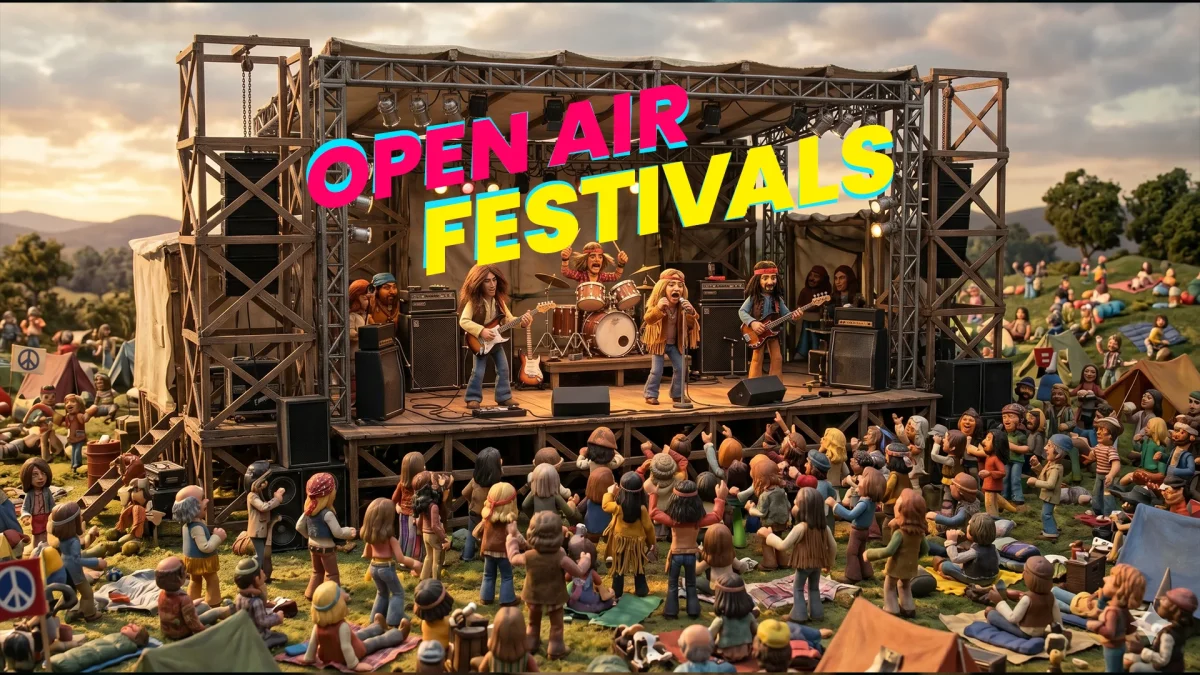

Tents, Mud, and More...
Open air festivals are one of the rare places where you find yourself among strangers in a field and feel a part of the whole. It is genuinely hard to find that feeling anywhere else. A stadium concert does not give you that feeling, and streaming platforms certainly do not.
And... As we arrive at 2026, we can see that this culture has been going through a quiet but deeply rooted transformation. Not just music festivals, but art festivals, food festivals, zine festivals, and even absurd organisations called "festival of nothing" exist now. This is precisely the point where I wanted to stop and take a closer look.
The Stage Has Changed
We all know the legend of Woodstock. 1969, half a million people, mud, and peace. That narrative became so deeply embedded in us that whenever we hear the word festival, that pastoral, slightly chaotic, slightly idealist scene still comes to mind.
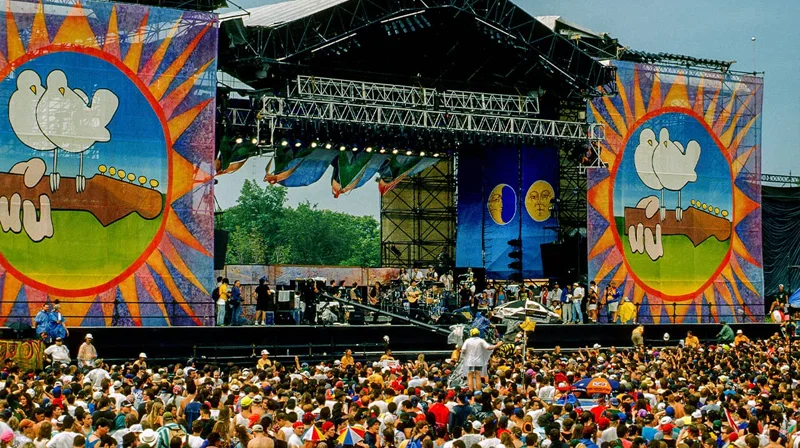
But it is 2026 now, and open air festivals have moved far beyond that definition. In both better and stranger directions. Let us take a look together.
7 Things That Are Changing Open Air Festivals
1. The Shift from Lineup to Experience
In the past, the primary reason for going to a festival was the question of who is performing on stage. Now another question has been added alongside it: What is it like to actually be there? Stage design, the architecture of the festival grounds, the selection of food & drink vendors, and even the quality of the toilets have all started to influence ticket sales.
Do not underestimate this shift. People are no longer going just to listen, they are going to experience the event. And this difference is completely changing how organisers distribute their budgets.
2. The Rise of Niche Festivals
Alongside large festivals that appeal to everyone, smaller events targeting a very specific audience have steadily carved out a stronger place for themselves. From festivals that bring together only synthwave listeners to exclusive gatherings for vinyl collectors of a particular era. This niche structure helps create a stronger sense of belonging.
And with this feeling, the community gets stronger, which makes the event stronger. That equation has not changed.
3. The Pressure of Sustainability
Bans on plastic cups, carbon footprint calculations, and zero waste targets... Festivals focusing only on the entertainment value is no longer enough. They also need to demonstrate sustainability and a purposeful, meaningful approach. This is actually a good thing. But sometimes, when this rhetoric isn't backed by real practical action, the negative impact can outweigh the positive.
Festivals that avoid falling into that strange territory known as greenwashing are the ones that earn audience loyalty in the long run. Organizations like Green Music Initiative provide serious pressure and guidance to the industry in this area.
4. Ticket Prices and the Problem of Access
To be honest, this one is a bit of a sore point. Ticket prices for major European festivals have seen an incredible increase over the past few years. A week-long festival pass is now a serious budget item. This situation is, without people realising it, turning what is called "festival culture" into the hobby of a specific socioeconomic group.
And this is a structural issue that deeply affects the world of festivals. The solution is not easy, but even talking about it matters.
5. Stage Technology and Audience Expectations
LED walls, holographic elements, spatial audio experiments... The technical production quality of open air concerts has reached such a point that audience expectations have risen accordingly. This is both exciting and a serious source of pressure for artists.
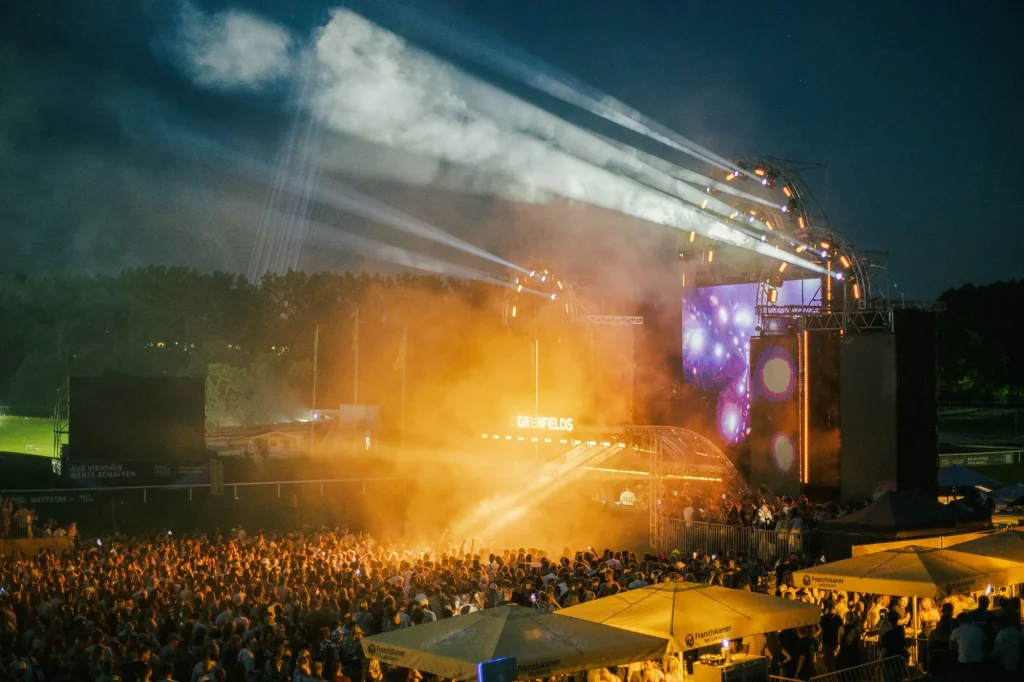
But it also needs to be said... Sometimes, a performance done with just a microphone and good sound leaves all that production behind. The real magic is there, after all.
6. The Impact of Social Media on Festivals
Think about it for a moment... At a festival venue, is the most photographed spot the stage, or the decorative areas specifically designed to be "instagrammable"? At most major festivals now, the answer is leaning toward the latter. Organisers know this too, and they consciously design certain sections of the venue to be content-friendly.
Is this a bad thing? It is debatable. But the distance between "being there" and "being seen to be there" feels like it widens a little more with each passing year, at least according to me.
7. The Headliner Shortage and the Nostalgia Economy
Everyone is now talking about the lineup problem at major open air festivals. The pool of headliners who can genuinely fill a festival has shrunk. Because of this, many festivals cycle through the same names year after year, or lean on the nostalgia pie: reformation tours, anniversary album performances, and "one last time together" concerts.
Nostalgia is not bad. But does a culture that constantly walks while looking backwards leave any breathing room for new voices? That question matters.
The Matter of Community
The most valuable thing about open air festivals, in my opinion, is still their capacity to build community. No matter how strong an audience you build online, the bond created by being physically present in the same space is something else entirely.
Leaning on someone's shoulder in the front rows at a small punk festival, or smiling at the exact same note at the exact same moment as a complete stranger at a jazz festival... These moments never show up in streaming statistics. But that is what makes a live experience unique.
What Is the Situation in Turkey?
I think the open air festival scene in Turkey sits in a genuinely interesting place, both in terms of potential and constraints. The geography is incredible... Ancient sites, coastlines, plains. But the organisational infrastructure, permit processes, and economic conditions make it difficult for that potential to fully open up.
That said, particularly in Istanbul and along the Aegean coast, there has been a noticeable increase in recent years in the number of both music and culture-focused festivals. And small-scale niche events often offer a far more sincere atmosphere than large organisations do.
A Note from Neptune
Open air festivals are not perfect. They are expensive, sometimes overcrowded, and sometimes the real music gets lost inside the production. But there is something truly beautiful at the core of this culture, which is the will to bring people together under the same sky.
And that will is still alive, through all the chaos. We just need to nurture it. Come on, let us meet at the next festival. Maybe muddy, maybe sunny, but definitely together.
Maybe we will meet on Neptune after that. Stay with love and peace, people.


