
I had come for two days. I stayed for three weeks. I discovered what is called slow travel by accident, on a street in Naples, in front of a bodega door opening with the scent of fresh limoncello, with a missed flight ticket in hand.
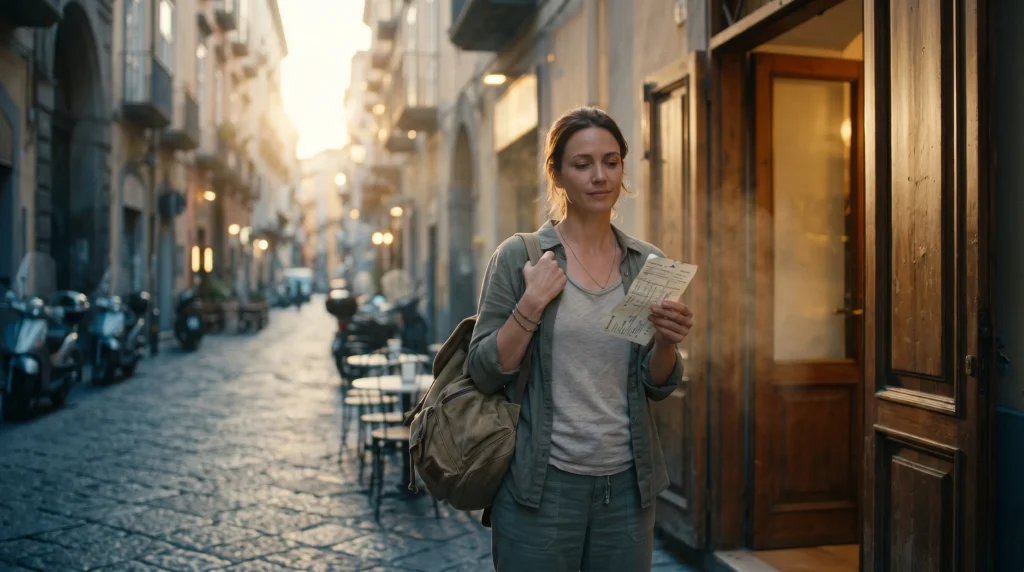
In that moment, I understood that there is a big difference between "seeing" a city and "spending time" in that city.
What Is Slow Travel?
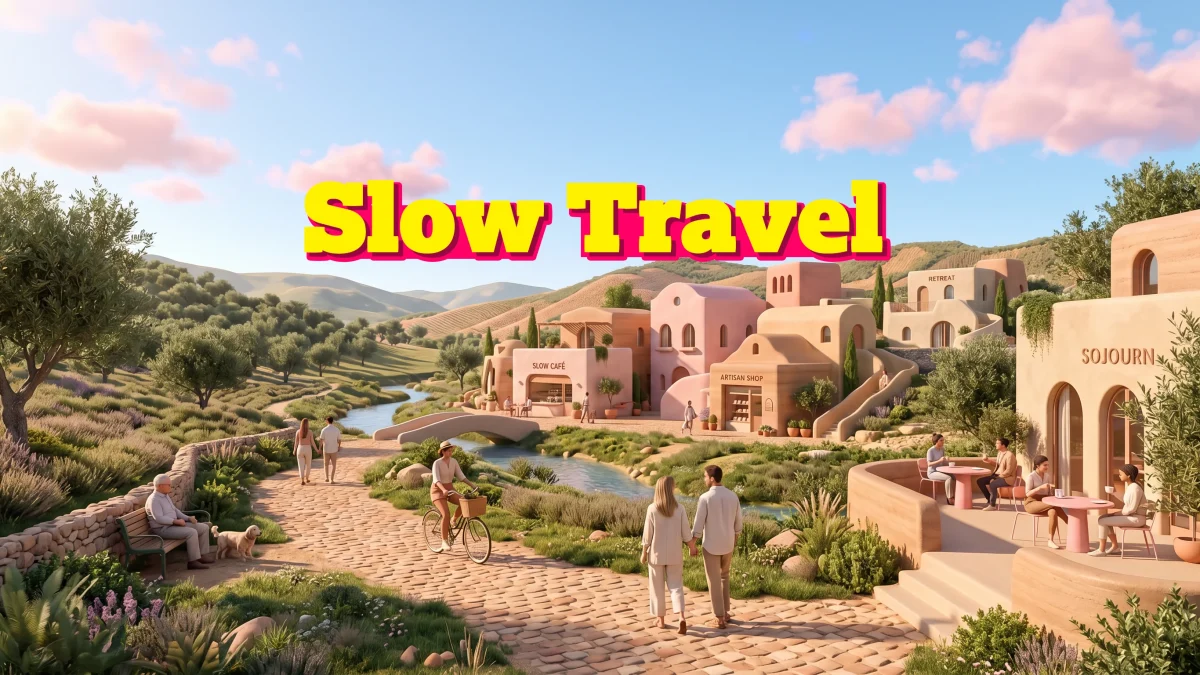
Slow travel works in the exact opposite way to the classic tourist model. This is not three nights in a big hotel with breakfast included, museums after museums, shopping in the afternoon, and Google's suggested "best restaurant" in the evening. It means staying in a place for at least a week, preferably a month, exchanging greetings with the neighbourhood grocer, learning what closes on Mondays, getting off at the wrong stop and not feeling sorry about it.
The concept is not new. This is actually the old way of travelling. But ever since the pandemic, especially with the widespread adoption of remote work, slow travel became a systematic choice. Now instead of saying "I'm going on vacation," people say "I'm going to live there for a while."
Why Is It Trending Right Now?
As we enter 2026, it is clear that most travellers are experiencing serious fatigue. This is the weariness of a generation that travels to produce content, sees every place as a "content location," and yet actually can't truly experience anywhere.
On top of that, the devastating impact of overtourism can no longer be denied. UNWTO's latest reports document that cities like Venice, Barcelona, and Dubrovnik are actually being damaged by the density of tourists. In this context, slow travel is both a personal preference and an ethical stance.
The culture of short vacations only scratches the surface of a place. Slow travel goes inside it.
Living in a Neighbourhood for Weeks
The intensity you feel when you first set foot in a city is not that city's real rhythm. The airport exit, the first taxi, the bewildered eyes, the question "where should I go?" All of these are the beginning of tourist mode.
Everything changes at the start of the second week. You already know that the bakery bread comes out of the oven at 07:30. The owner of the corner café starts preparing your order without asking when they see you. You know which day the market is set up and stopping by becomes one of your routines.
A friend once described a month she spent in a neighbourhood in Lisbon like this: "The first week I was getting lost. The second week I didn't want to get lost because I knew the streets. The third week I wanted to get lost but I couldn't anymore." This sentence carries the essence of slow travel.
Building spatial memory, etching a city into your mind, is both an intellectual and an emotional process. I think this is what meaningful travel looks like.
Food, The Fastest Way to Slow Down
The quickest way to understand a place is not to eat there, but to observe what is eaten there, who eats what, when, and where.
The mercado stalls in Mexico, Oaxaca, where workers eating tlayuda crowd together before 06:00 in the morning, don't appear in any restaurant guides. But if you spend an hour there, you will understand the region's economy, the rhythm of daily life, and how people talk to each other.
The food dimension of slow travel begins not with searching for famous restaurants but with finding the neighbourhood's bakery, its family owned local restaurant, its local pubs... Finding these takes time. That's why time is needed.
Having a conversation at a butcher's counter, being there long enough to make that conversation possible, getting your ear accustomed to the local language... All of these are things that can happen over a few weeks.
Difficult Truths - Not Everything Is Rosy
It is necessary to be honest here. Slow travel does not always offer a storybook experience. Staying in a place for a long time also means confronting that place's realities.
It means witnessing the destruction of gentrification, watching how Airbnb empties out a neighbourhood, how chain cafes replace local shops. Being a long-term guest also carries the risk of becoming part of this change.
Long-term visitors sometimes contribute to price bubbles without being aware of it. It is easy to look away from this, but a sincere understanding of travel requires noticing it.
Then there are practical realities. Visas, insurance, the healthcare system, loneliness. Staying alone in a city for weeks can sometimes feel heavy. The romanticised "slowness" can sometimes turn into nothing more than a long and uncertain monotony.
How to Get Started
This is a process that is simple in theory but habit-breaking in practice. A few concrete starting points:
- Choose a neighborhood, not the center: Instead of touristy districts in the city center, find accommodation in neighbourhoods where locals live. Weekly rental apartments offer a more authentic experience than Airbnb.
- Leave room for uncertainty: Planning for every single day keeps tourist mode going. Leave one morning just for wandering, one afternoon just for sitting.
- Get into the market rhythm: When local markets, bazaars, and public squares become part of your weekly routine, the city starts to become understandable.
- Learn the language, even if it's not perfect: Just "thank you" and "one coffee please" is enough. Showing respect for the local language opens doors.
- Sign up for something: A cooking class, a yoga lesson, a painting workshop. It does not matter. A recurring meeting point with a place makes it easier to put down roots.
You can browse other posts in the Discover category and find different perspectives on travel and culture.
Final Thoughts...
Those three weeks in Naples began for me with a miscalculation. But what came out of that accident fundamentally changed the way I understand travel.
I now know why the limoncello smelled better in that bodega. I was not drinking it in a rush, in the frenzy of "now let's hurry to the next place.", I was actually enjoying the moment. I knew the street. I knew the vendor. That scent was not the color of a trip, it was the texture of that day.
Slow travel is not about seeing fewer places. It is about truly seeing what you see.
Go. But before you go, don't buy your return ticket too far in advance.