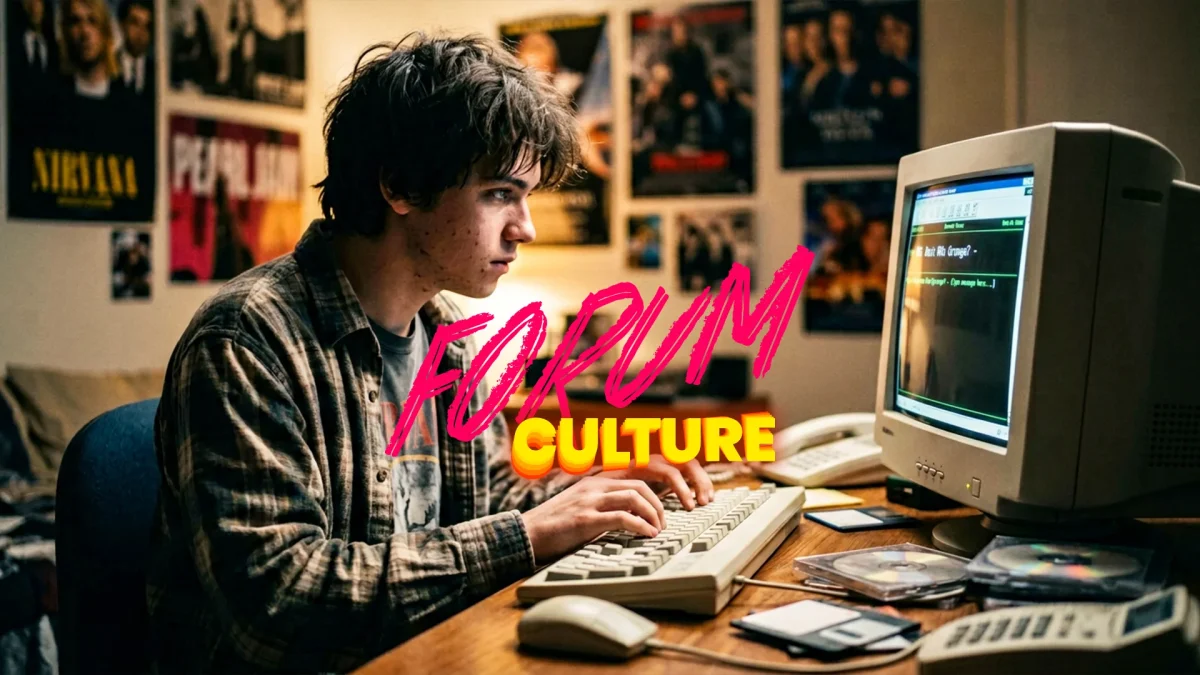

We lived through what was perhaps the internet's best era without anyone noticing. Forum culture brought people together long before what we now call "social media," and in a far more sincere way. But saying this out loud now sounds almost like a nostalgic complaint. It isn't.
This is not a "the old days were better" piece. This is a piece that tries to understand how something worked, why we lost it, and whether we actually lost it at all.
What Was Forum Culture and Why Did It Matter?
Forums were the first places where the internet built real communities in the truest sense. People interested in a topic would gather, anonymously or under a username, and they would debate, learn, argue, and sometimes become genuine friends.
Compared to today's social media, the difference is this: forums had a hierarchy. Post count, membership date, moderator status. There was a sense of belonging somewhere, and that sense had to be earned. Simply creating an account and consuming content was not enough.
The Golden Age: phpBB, vBulletin, and Turkey
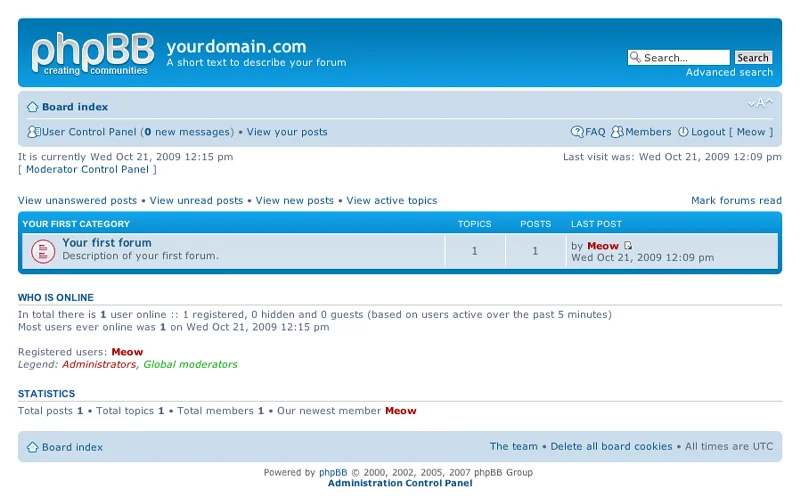
In the early 2000s, Turkey's internet infrastructure was still developing, but forums grew at an incredible pace. phpBB and vBulletin based sites hosted every hobby, every subculture, and every area of interest. Music forums, gaming forums, philosophy discussion platforms.
A large portion of these ran on personal servers, sometimes kept alive by hosting plans paid for out of a single individual's own pocket. Not to make money, but to keep the community alive.
During the same period, phpBB and similar open source forum software worldwide enabled hundreds of thousands of independent communities to emerge. That scale may seem small today, but when you consider the bandwidth and user numbers of that era, it was truly impressive.
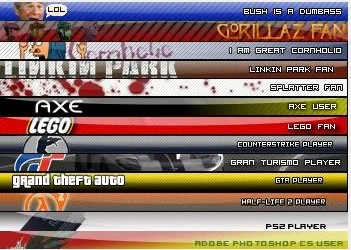
The Death Story: How Social Media Swallowed Everything
Facebook opened to everyone in 2006. Twitter grew in popularity. Smartphones became widespread. And forum culture could not survive that wave.
But reading this process as "social media was better and forums died" is wrong. The correct reading is this: the attention economy replaced deep discussion with instant reaction. Forums required not bandwidth, but time. And time was redistributed by algorithms.
Reading a forum thread could take hours. Reading a tweet takes seconds. Whichever model attracted more users was where capital flowed. Not to forums.
Many long-established forums survived into the mid-2010s. But moderators grew tired, server costs became unmanageable, and new members stopped arriving. They closed one by one or were buried in archives.
But Here Is the Truth: Forum Culture Did Not Die
Reddit was founded in 2005 and is essentially a forum. There are threads, comments, and subcommunities. The structure is almost identical. Only the interface is different, and the scale is different.
Discord is the voice-enabled and instant version of forum culture. Servers, channels, roles, moderators. The core logic of a phpBB forum exists in Discord too. Just much faster and much less permanent.
This is where a critical difference emerges: searchability. You could find a discussion from an old forum on Google. Even years later. But a conversation in a Discord server mostly just disappears. No memory, no archive.
As we have seen in our other pieces on internet culture, every new platform gains something while losing something else. Discord gained speed and instant connection but sacrificed permanence.
Where Are We in 2026?
Something interesting is happening: a return to long-form content has begun. Substack discussion sections, Hacker News, certain Reddit subcommunities, and even specific Lemmy instances. As people grow tired of shallow discussion, they are moving toward deeper waters.
On the other hand, looking specifically at Turkey, some niche communities are still alive in forum format. Certain hobby groups, technical communities, and collectors. These are ecosystems that never appeared on the radar of major platforms but function healthily within themselves.
Did quality increase as scale decreased? Perhaps that was the real secret of forum culture all along.
- IRC: Real-time, no logs, instant. The format that lost the most.
- phpBB/vBulletin forums: Permanent, searchable, hierarchical. Largely gone.
- Reddit: The greatest heir to forum culture, but struggling with rule and moderation issues.
- Discord: Instant and lively but without archives. A forum with memory loss.
- Lemmy/Mastodon-based forums: Decentralized, small-scale, experiencing growing pains.
| Platform | Era | Strength | Weakness |
|---|---|---|---|
| phpBB Forums | 2000-2010 | Permanence, searchability | Slow growth, maintenance cost |
| 2005-present | Scale, diversity | Moderation inconsistency | |
| Discord | 2015-present | Instant communication, liveliness | No archives, no searchability |
| Lemmy | 2019-present | Decentralization | Small audience, fragmentation |
Conclusion: What Remains?
Forum culture was not a piece of software. It was a way of behaving. Putting effort into a topic, developing your thinking, earning a place within a community. That behavior still exists. The platform changed, the format changed, but the human need for deep connection did not.
Perhaps what was lost was not the forums themselves. Perhaps what was lost was the internet of that era, slower and less optimized. An internet where an algorithm was not feeding you, where you had to make an effort to reach content.
The real question is this: can deep communities be built within the attention economy? In 2026, the answer to that has not yet become clear. But there are people trying. And that shows something is still alive.