


Before We Begin: Why This Topic?
Dear 2HBN readers, today we're starting from a slightly different place. I love you — three words, a universal feeling, but with an entirely different weight in every language. And I want to ask: how many times has an NPC in a game said those three words to you and made something tighten inside your chest?
For me, that moment came during a Liara conversation in the Mass Effect series. Years ago, at 2 in the morning, my coffee gone cold. And right then I thought, why does this feeling feel so universal? The language changes, the culture changes, but does the feeling stay the same?
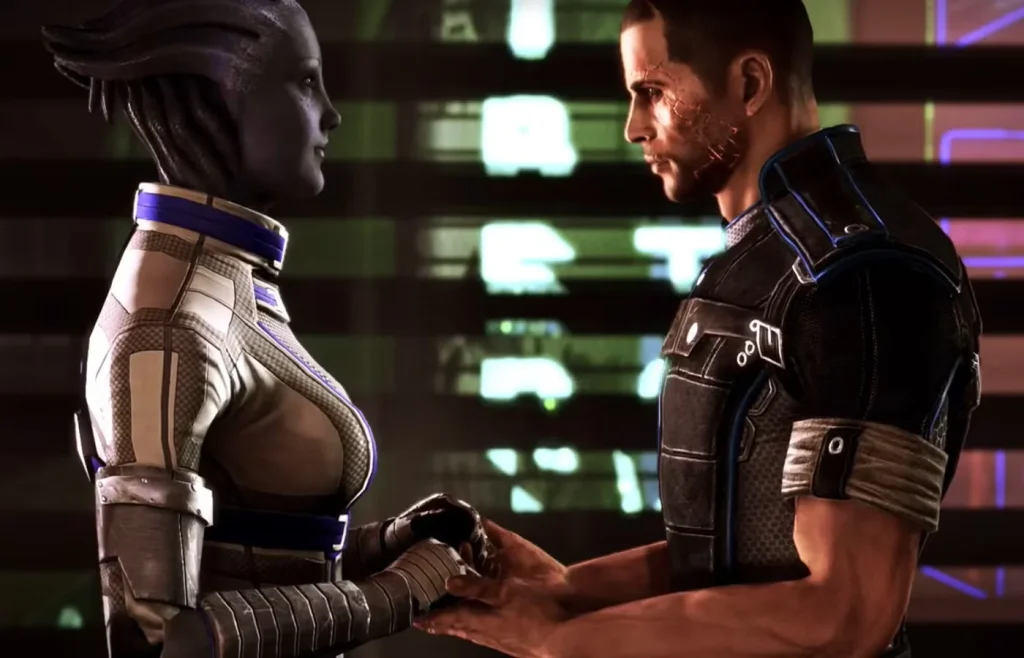
Let's find out. This post is both a language tour and a bit of a cultural chat. And of course we'll tie it back to games, this is 2HBN, it couldn't be any other way.
I Love You in 10 Languages
| Language | Expression | Pronunciation | Origin / Note |
|---|---|---|---|
| Turkish | Seni seviyorum | Se-ni se-vi-yo-rum | From the root "sev-" (to love); a structure unique to Turkish |
| English | I love you | Ay lav yu | From Old English "lufu"; used for both romantic and familial love |
| Japanese | 愛してる (Aishiteru) | Ai-shi-te-ru | An extremely heavy expression; rarely spoken in everyday life |
| Spanish | Te amo | Te a-mo | From Latin "amare"; deeper and more romantic than "Te quiero" |
| French | Je t'aime | Zhuh tem | Latin origin; one of the most widely recognized expressions of love in the world |
| Arabic | أنا أحبك (Ana uhibbuk) | A-na u-hib-buk | Used for a male addressee; "uhibbuki" is used when speaking to a woman |
| Korean | 사랑해 (Saranghae) | Sa-rang-hae | Became one of the most widely known Korean words worldwide with the K-drama explosion |
| Russian | Я тебя люблю (Ya tebya lyublyu) | Ya te-bya lyub-lyu | Said far less often compared to Western languages; showing love through actions is preferred |
| Italian | Ti amo | Ti a-mo | Latin origin; related to Spanish but with a completely different intonation |
| Chinese (Mandarin) | 我爱你 (Wǒ ài nǐ) | Wo ay ni | Rarely spoken in traditional culture, but that's changing among younger generations |
The Stories Behind the Languages
Japanese: The Power of the Unspoken
Aishiteru carries such weight in Japanese that most Japanese couples may say it only once or twice in their entire lives. For everyday expressions of affection, "Suki da yo" (I like you / I'm fond of you) is far more common. The Final Fantasy and Persona series have masterfully reflected this cultural nuance in their games, characters most often express their love not through words, but through actions.
Isn't that remarkable?! Even the act of not saying a word carries cultural meaning.
Russian: Show, Don't Tell
Saying Ya tebya lyublyu in Russian is far less common than it is in the West. In Russian culture, love is shown through action rather than words, cooking someone a bowl of soup, handling someone's errands, simply being there for them. This actually explains why games that draw from Eastern European mythology, like The Witcher, build their romanticism so firmly on the principle of "show, don't tell."
Korean: The Miracle of Pop Culture
Saranghae has become one of the most recognized Korean words in the world, carried there on the wave of the K-drama and K-pop explosion. Ten years ago, only a handful of people outside Korea knew this word, today you can find it in YouTube comments, on social media, and even in gaming chat channels. This is how culture carries language forward.
French: The Lingua Franca of Love
Je t'aime has been used so extensively in world cinema and literature that it has almost become a transcultural expression. Video games are no different, a whispered phrase in French during a romantic scene instantly sets the mood. Is it a cliché? Maybe. But it works.
Arabic: Meaning That Shifts With Context
In Arabic, the root uhibb encompasses both romantic love and love in the general sense — spanning a wide spectrum from devotion to God to affection for a friend. This is why, in Arabic-speaking cultures, saying this word carries the full depth of your relationship with the person you're saying it to. It's a richly layered expression.
Reflected in Games
Scenes That Take Courage to Say "I Love You"
Love confessions in games often become the most talked-about moments of all. The romantic scenes in Mass Effect, the marriage proposal in Stardew Valley, the "support" conversations in the Fire Emblem series, all of them deliver those three words across different languages and different cultural frameworks.

And here's what I've noticed: if a game has set up that "I love you" moment well, it hits you in the gut regardless of what language it's in. An aishiteru spoken in Japanese and a te amo whispered in Spanish give you the same feeling. Because a well-written character relationship transcends the language barrier.
Localization: The Translator's Impossible Task
This is exactly why game localization is an incredibly difficult job. Carrying the tone of that "unspoken love" from Japanese into English, and from English into Turkish, every translation means some degree of loss. We've touched on the topic of localization from time to time in 2HBN's gaming articles it's a subject that deserves its own dedicated post, really.
But let me say this: the best localizations are the ones that carry the feeling, not just the words. Preserving the soul of I love you matters far more than translating the words one-to-one.
The Multilingual Gaming Experience
Playing a game in its original language can offer a very different experience from its localized version. The difference between a Persona game with Japanese voice acting and one with English voice acting isn't just a matter of vocal tone, the cultural weight the words carry changes too. If you've never tried it, I'd recommend playing your next JRPG with the Japanese voice track. IGN's list of the best JRPGs is a great place to start.
And of course, you keep the subtitles on. I always do, you're picking up the language while not missing a single thing. Win-win.
The Universal Language of Love: Gameplay
When you think about it, saying "I love you" in games can take so many different forms. Saving your friend's character at the last second in a co-op game. Spending hours together working through a puzzle. Finishing It Takes Two as a couple. Aren't all of these, regardless of language, a kind of "I love you"?
I can already hear it: "Neptune got a little too romantic this time." You're probably right. But look, what I'm saying isn't wrong.
Final Words
Ten languages, ten different cultures, ten different feelings, but underneath them all lies the same thing: the need to connect. And that need sits right at the very heart of what makes games so powerful. Saying I love you takes courage, whether in real life, or in the sense of looking at an NPC and thinking "I felt that."
No matter what language it's said in, these three words (sometimes two, sometimes five) are still among the most powerful expressions there are. And a good game knows this, which is why they craft those moments with such care.
Maybe we'll meet on Neptune someday. Stay loving and stay peaceful, everyone.