

Introduction: The Weight of a Massive Budget
Resident Evil 6 is a title that Capcom released on October 2, 2012 for consoles and on March 22, 2013 for PC, one that shaped the fate of the series for a long time. Talking about this game is still controversial. Some see it as a turning point for the series, while others describe it as the biggest blow ever dealt to it.
But here is the truth: Resident Evil 6 is not just a game. It is the product of a company that misread market signals, misinterpreted stories of success, and feared losing its own identity.

What Did Resident Evil 6 Want to Be?
In the early 2010s, the action-horror genre was at the peak of its rise. Call of Duty was selling 20 to 25 million copies a year. Resident Evil 5 had broken the series record at the time by selling approximately 7 million copies in 2009. For Capcom, the message seemed clear: more action, more co-op, bigger explosions.
The production budget for Resident Evil 6 was known to be exceptionally high by Capcom standards. The company wanted to create a global blockbuster with this game, aiming to position Resident Evil not just as a horror game but as an action franchise.
The result: 4 separate campaigns, 3 different gameplay styles, and roughly 25 hours of content. In theory, a game with something for everyone. In practice, a structure that failed to fully satisfy anyone.
Four Stories, Four Different Games
The most distinctive decision in Resident Evil 6 was offering four separate campaigns instead of a single narrative: the Leon, Chris, Jake, and Ada campaigns. Each carried a different tone and gameplay style.
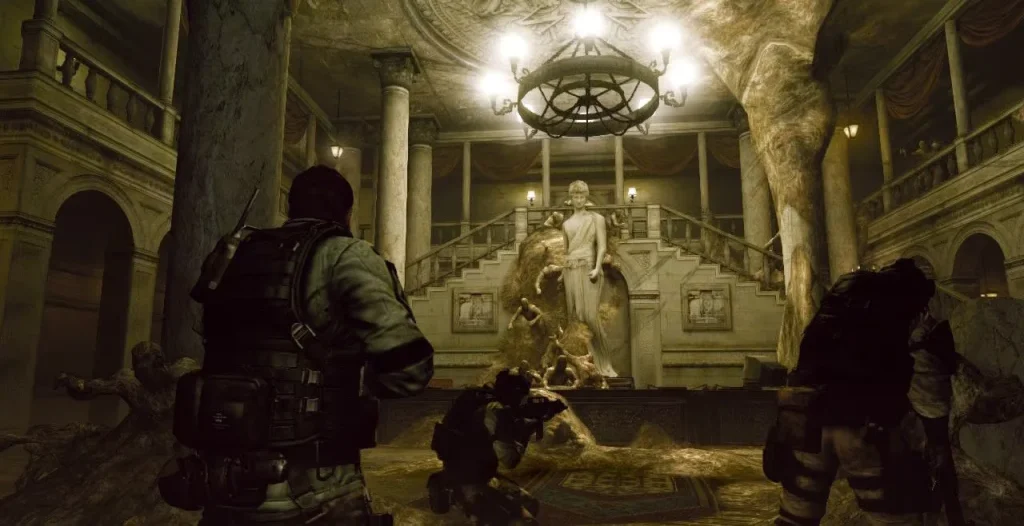
- Leon Campaign: The section that tries hardest to capture the traditional Resident Evil feel. Gothic environments, zombies, and a degree of tension. Fans generally point to this campaign as the most well-received.
- Chris Campaign: Almost entirely a third-person shooter. Horror atmosphere is at a minimum, action is at a maximum. Criticized as the part most distant from the spirit of the series.
- Jake Campaign: Centered on Jake Muller, the son of Albert Wesker. Heavily focused on action and escape sequences, with some sections revolving around evading a giant enemy called Ustanak.
- Ada Campaign: The secret campaign you need to unlock. A structure that ties the events of the others together from a different perspective. Relatively short but narratively significant.
This structure was bold. But it also created a lack of focus. When you try to deliver four different feelings in one game, you may end up not developing any of them deeply enough.

What Lies at the Heart of the Criticism?
When the game launched, the scores it received fell below average. Critics highlighted pacing issues, excessive use of quick-time events, and camera angles. But the biggest complaint was an identity crisis.
Resident Evil 6 is neither survival horror nor a full-on action game. A structure caught between the two emerged, alienating fans on both sides. The user score on Metacritic diverges noticeably from the critic score, which shows that the game resonated with a broad audience but remained controversial in critical circles.
At the same time, the game's technical issues also came up. A poorly explained tutorial system, cluttered UI elements on screen, and camera angles that sometimes made control difficult were among the complaints that stood out in the initial version.
Does Commercial Success Answer the Critics?
Resident Evil 6 got off to a commercially strong start when it launched and eventually became one of the entries in the series to reach millions of sales over the long term. Although it initially fell short of the targets Capcom had set for that period, it reached significant numbers over time through digital sales and various platform releases.
But here is the truth: sales figures alone do not prove the quality of a game or the correctness of its direction. After Resident Evil 6, Capcom began seriously questioning the direction of the series. The result of that questioning was Resident Evil 7, released in 2017, a title that brought a radically different approach to the series, adopted a first-person perspective, and returned to survival horror.
The strong response that Resident Evil 7 received from both critics and fans served as an answer for Capcom. The gaming and technology analyses at 2hbn.com closely follow these kinds of industry shifts as well.
Looking Back from 2026: A Reassessment
As of 2026, conversations about Resident Evil 6 have changed. A portion of the fan community is rediscovering the game, sharing that they still find it enjoyable, particularly in terms of the co-op experience.
This process of reassessment is actually quite typical. Some titles that received harsh criticism at the time end up settling into a different position when viewed through a cultural lens years later. That debate around Resident Evil 6 has not yet closed.
On the other hand, it is also possible to better understand what the game was trying to achieve. Consider the pressure Capcom felt in the early 2010s: the market was shifting toward big action games, the company wanted to create a global hit, and development teams were working under that pressure. The challenges created by crunch culture and large-scale productions were real during that period as well.
The result was not a perfect game. But it was not an entirely meaningless effort either.
Conclusion: A Fair Verdict
Resident Evil 6 continues to be the most controversial game in the history of the series. As a title born in the shadow of both commercial calculations and a creative identity crisis, it offers an important case study for the industry.
Capcom learned from this experience. Resident Evil 7 and the remakes that followed showed that the studio both listened to its fans and returned to its own identity. But behind those successes lies the debate over direction that Resident Evil 6 created.
The real question is this: If Resident Evil 6 had not forced such a clear reckoning, could the series have reached the point where it stands today? Perhaps sometimes the most valuable lessons are learned at the heaviest cost.