
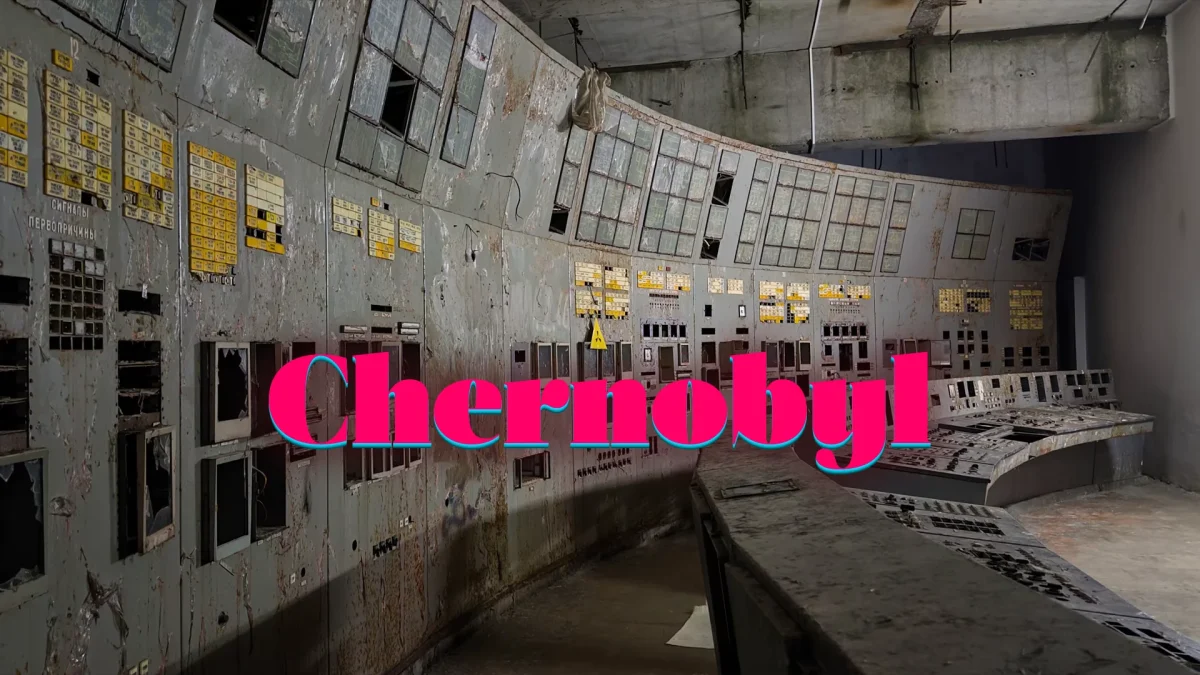

On the night of April 26, 1986, a few kilometers from the town of Pripyat in northern Ukraine, a reactor core tore itself apart. The sound of the explosion was heard dozens of kilometers away. But the real storm was invisible.
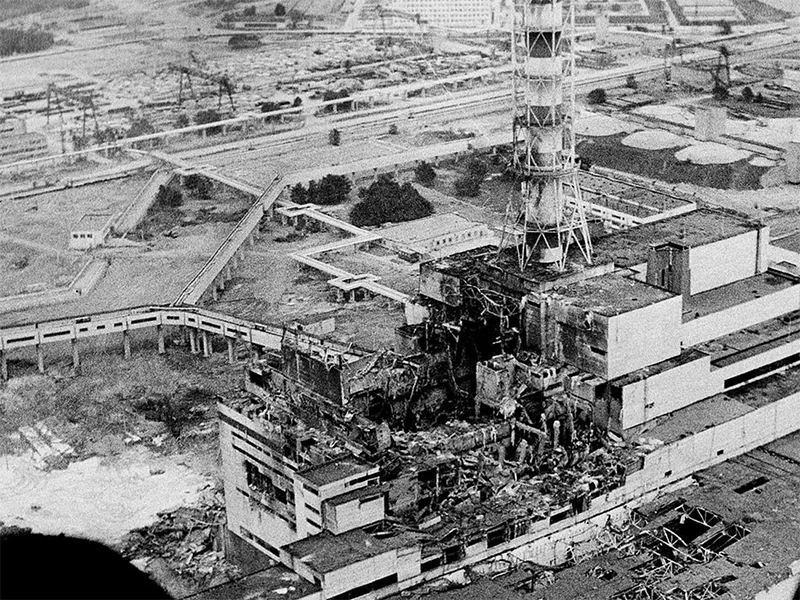
The Chernobyl disaster was not simply a nuclear accident. It was an empire's confession to itself, the moment an entire system and an entire ideology began to unravel. And that unraveling gave rise to the greatest nuclear catastrophe humanity had witnessed since Hiroshima.
That Night: April 26, 1986, 1:23 AM
Imagine yourself in the following scene: Pripyat, a Soviet model city of 49,000 people. Clean streets, modern apartments, fully stocked shops. The showcase of the Soviet Union. Workers on the night shift begin a routine safety test. The test is designed to measure the reactor's capacity to operate without electricity. It sounds ordinary.
It is not ordinary. Reactor 4 is being pushed far beyond its design limits. Engineers, under pressure from management, are skipping procedures. Power drops, control rods are withdrawn, and at 1:23:40 AM a nuclear steam explosion, followed by a second explosion, blows the top off the reactor. The sarcophagus is not even a concept yet. Burning chunks of graphite are scattered around the reactor. Radioactive smoke rises into the sky.
The streets of the city are still asleep. Nobody knows.
Why Did the Reactor Explode?
The answer to this question depends on another question: was it human error or a systemic failure? And the answer is both.
The technical reality: The design of the RBMK type reactor contained a serious flaw. At low power, the reactor would accelerate uncontrollably on its own, a characteristic known as a positive void coefficient. This meant that as water was lost, power increased. The opposite is true for the vast majority of Western reactors.
The systemic reality: This flaw was known. But reports were suppressed, operators were never informed, and the test conditions had already created a dangerous combination. In the Soviet system, delivering bad news to superiors was career suicide. Nobody said stop.
You have heard this story before: institutional pressure, the reflex to cover things up, and hierarchical fear. Only this time the price was not an ugly meeting. It was the lives of hundreds of people.
The Initial Response: Heroes and Victims
When firefighters arrived in the area within the first hours, they mistook the fire above the reactor for an ordinary blaze. They were doing their jobs. Some picked up glowing chunks of graphite with their bare hands.
Consider Vasily Ignatenko. He was 25 years old. He was a firefighter. He ran toward the fire because that was his job. His wife Lyudmila waited for hours at the hospital door. In her later writings, she described that night not as a turning point in her life, but as a night of duty. Vasily died two weeks later.
Approximately 134 members of the first response teams contracted acute radiation sickness. Twenty-eight of them died within the first three months. According to World Health Organization reports, long-term cancer cases continue to be debated to this day.
The Great Cover-Up: What Did the Soviets Do?
On the morning of the explosion, the residents of Pripyat received no official statement. Children went to school. Weddings were celebrated. People walked in the park. Radioactive dust drifted through the air.
The evacuation order came only 36 hours later. More than 1,100 buses arrived in the city, and 50,000 people were told to leave their homes "temporarily." Most took a few days worth of essentials. They never returned.
The Kremlin received its first news from the international press. Abnormal radiation levels had been detected on workers at a nuclear plant in Sweden. The source was traced back and pointed to the Soviet Union. Glasnost was still in its infancy, and the Soviet leadership was trying to tell the world what a minor accident this had been. Nobody was convinced.
This cover-up attempt, as Mikhail Gorbachev later admitted, showed him why reforms were urgent. Chernobyl accelerated glasnost and perestroika. And those reforms laid the groundwork for the collapse of the Soviet Union. One reactor shook an empire.
The Human Cost: Numbers and Faces
The figures are always disputed. Soviet records were deliberately kept incomplete. Estimates from independent researchers vary enormously.
- More than 350,000 people were permanently evacuated.
- The 30-kilometer zone known as the Exclusion Zone remains off-limits to this day.
- Cases of thyroid cancer, especially among children, increased dramatically in the region.
- According to the International Atomic Energy Agency, approximately 4,000 cases of thyroid cancer were directly linked to Chernobyl.
But behind the numbers are faces. Elderly people who could never return to their own homes. Children playing outside as the radioactive cloud passed over them. Liquidators, the cleanup workers, who rushed to their posts without ever asking why. The vast majority of them never learned the true extent of the radiation they had been exposed to.
There is a theme that recurs frequently in our history articles: great disasters are measured not only by the events themselves, but by the institutional responses they receive. At Chernobyl, both the disaster and the response together form one of the darkest pages in human history.
40 Years Later: What Does Chernobyl Mean Today?
As of 2026, exactly 40 years have passed since the Chernobyl disaster. But that does not mean the subject has been consigned to history.
The Exclusion Zone has today become a strange wildlife sanctuary. Wolves, lynxes, and deer have quietly spread across the area humans abandoned. Nature emerged stronger even than humanity's greatest self-made catastrophe. But this is not a romantic ending, because the animals still live on radioactive soil.
The 2019 HBO series Chernobyl reintroduced this story to a global audience and sparked one of the largest waves of "dark tourism" in history directed at Ukraine. You can also reach our related article through the link. The Russian invasion of 2022 briefly placed the Chernobyl Exclusion Zone under military control. The prospect of reactor ruins being turned into a battlefield left the world holding its breath.
And now, the nuclear energy debate is back on the agenda. The climate crisis is making it necessary to abandon coal and gas. Nuclear energy is being placed on the table as a zero-carbon emissions alternative. In the shadow of Chernobyl, this debate inevitably carries a different weight.
So what have we truly learned, 40 years on?
Perhaps this: the most dangerous thing is not the reactors themselves. Systems that cover up mistakes, hierarchies that cannot pass bad news upward, and institutions that think "this cannot happen to us" constitute the greatest nuclear risk. Chernobyl was a failure of governance before it was a failure of engineering.
And that lesson applies far beyond nuclear power plants.
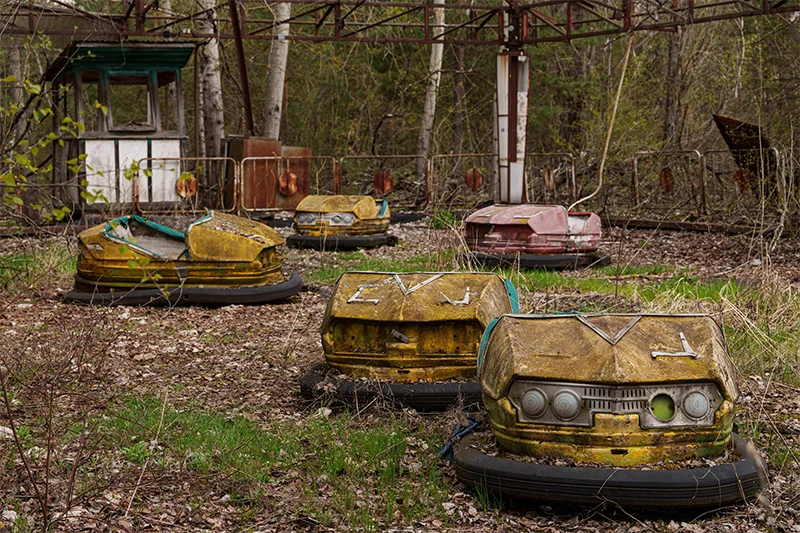
Pripyat remains deserted today. The amusement park was abandoned before it ever opened. The toys ordered for the children still sit on school desks. The clock stopped, but we must ask ourselves: did we truly learn anything at all?