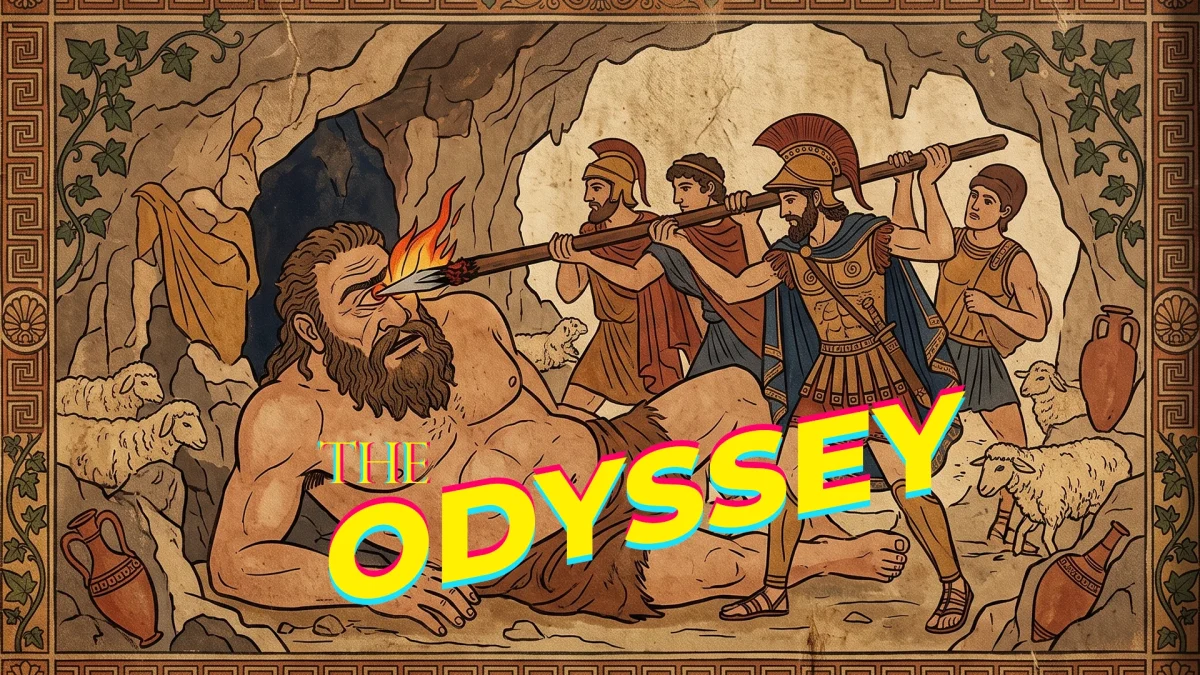

Let’s all admit it... When Christopher Nolan announces a movie, the world pauses for a second. When The Odyssey was announced, it didn’t just pause. It was completely knocked off its feet. What would Homer’s thousands-year-old epic look like in the hands of the director behind Interstellar and Oppenheimer? If that question has been bouncing around your head too, this article is for you.
2026 was already shaping up to be a busy year for movies, but The Odyssey quickly sailed straight to the top of the list. We’re talking about a film that could become a milestone, not just for Nolan fans, but for all lovers of epic cinema.
Why Is Everyone Talking About The Odyssey?
Because this isn’t just “a movie adaptation of an ancient epic.” Throughout his career, Nolan has explored time, memory, and the limits of human endurance. It’s a journey that stretches from Memento and Inception to Dunkirk and Oppenheimer. And now, he’s pouring everything he’s learned into what may be the greatest “journey home” story ever told. (Have we made enough jokes about Matt Damon always trying to get home yet?)
Homer’s Iliad and Odyssey are cornerstones of Western literature. But Nolan’s The Odyssey is clearly more than an academic tribute. Nolan’s movies usually leave you asking one question: “Why would a person do this?” With The Odyssey, that question gets even bigger... How far would someone go to make it home? What would they risk along the way? And after everything they’ve been through, could they possibly return as the same person? Odysseus’ story is exactly the kind of tale Nolan loves - an obsession with time, sacrifice, and the price we pay for the things we refuse to let go of.
Nolan and Homer - What Kind of Match Is This?
Think about it... Odysseus spends ten years at war and another ten at sea. For twenty years, he’s trying to get home while being toyed with by gods, battling monsters and witches, and wrestling with his own weaknesses. Doesn’t that sound a little like Cooper in Interstellar? Time, distance, the longing for home...
As expected, Nolan doesn’t tell the story in a straight line. The movie opens near the end, then moves through memories, stories, and stories nested inside other stories. So yes, my prediction that we’d get at least one in medias res structure (when a story begins in the middle of the action) was correct. This is Nolan, after all. It would have been far more surprising if he had simply started at the beginning.
When it comes to the mythological elements, Nolan doesn’t choose between realism and spectacle. He brings the two together. The gods feel more grounded and human, while Polyphemus, Circe, and the Sirens lose none of their power. In fact, some scenes feel less like an epic adventure and more like you’ve accidentally wandered into a very dark horror movie. The Circe sequence in particular feels like a slightly unsettling preview of what Nolan might do if he ever decided to make a full-blown horror film.
Did the Cast Live Up to Expectations?
Matt Damon plays Odysseus. If your first reaction to that casting was “hmm,” I understand. But once you’ve seen the movie, it’s easy to see why Nolan chose him. Damon has spent years playing smart, exhausted men who are just trying to survive. The Martian, Good Will Hunting, Stillwater... The man has practically patented the “brilliant enough to solve anything, emotionally too drained to enjoy it” archetype. He’s also constantly trying to get home. A strangely specific area of expertise, but a useful one.
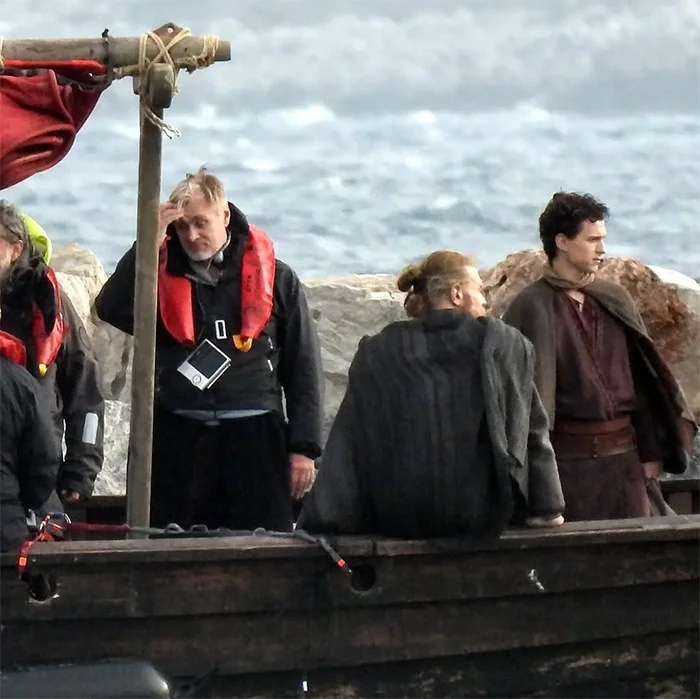
The rest of the cast is no small deal either. Tom Holland plays Telemachus, carrying the younger and more vulnerable side of the story. Anne Hathaway’s Penelope is far from a woman sitting quietly in a corner, waiting for her husband to return. She’s calm, powerful, and fully aware of the games being played around her. This is a queen who knows exactly what’s happening in her own palace.
Zendaya’s Athena serves as Odysseus’ guide and confidante, while Charlize Theron gives Calypso a lonelier, more human side. Robert Pattinson, meanwhile, is impressively unpleasant as Antinous. Samantha Morton’s Circe also becomes one of the movie’s most memorable characters in very little time. Still, with a cast this crowded, it’s hard not to feel that a few names are slightly underused. Apparently, even three hours isn’t enough for everyone.
And one more thing: Nolan’s movies really know how to bring performances to the foreground. Think about what Cillian Murphy did in Oppenheimer, or the emotional weight Matthew McConaughey carried in Interstellar. We can safely say Damon delivers that kind of central performance as Odysseus.
You Already Know the Story, Except You Don’t
Have you read The Odyssey? Maybe you have. Maybe you’re thinking, “I know it from somewhere.” But most of us know the epic mainly through pop culture references. The Sirens, the Cyclops Polyphemus, Circe, Scylla, Charybdis... This is the story that brings them all together.
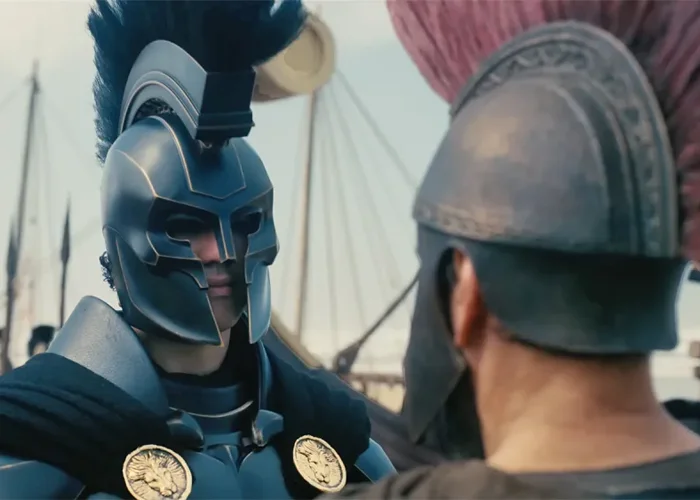
At its core, Odysseus wants to return home, but he has no idea whether the life he left behind will still be waiting for him twenty years later. Is Penelope still waiting? Will his son Telemachus even recognize him? After ten years at war and another ten on the road, does “home” still mean the same thing?
This is where the movie gives its strongest answer. Returning home doesn’t mean everything just picks up where it left off. As we know, Odysseus eventually reaches his home, but he can’t escape what the war and the journey have left inside him. And that seems to be the question Nolan is most interested in: A person can return to their home, but can they ever truly return to their old life?
Why Should You Watch It, Why Should You Be Excited?
Let’s make a list, because this is one of those topics that demands bullet points:
- The IMAX experience: Nolan movies are made to be seen in theaters. Watching The Odyssey at home would be like eating pizza cold. Can you do it? Sure. But why would you? If you can, see it in IMAX.
- A guaranteed visual feast: Many of the images created by Nolan and cinematographer Hoyte van Hoytema genuinely look like paintings. The scenes shot on real seas and in physical locations (with minimal usage of CGI) also make you feel just how brutal the journey is. You feel exhausted watching it, so imagine how Odysseus feels.
- Ludwig Göransson’s score: After working with Nolan on Oppenheimer, Göransson returns with music and sound design that dramatically amplify the sea voyages and creature sequences. At certain points, you’re not so much listening to the score as feeling it directly in your chest.
- A mythological adaptation worthy of the big screen: Greek mythology has rarely received the cinematic treatment it deserves. The Odyssey manages to feel spectacular without turning the story into a generic, effects-heavy fantasy adventure.
- Nolan's Craft: At this point in his career, Nolan knows how to make movies that are both massively expensive and intellectually satisfying. Few directors balance those two things quite as well.
Of course, it’s hard to call the movie flawless. Its nearly three-hour runtime won’t be easy for everyone. The constant movement through time may initially confuse viewers who don’t know the epic, while the decision not to follow Homer word for word may frustrate a few classicists and devoted purists. Some characters in the enormous cast also get less screen time than expected.
But the much-discussed fear that Nolan might “strip away the mythology and turn it into a boring war movie” turns out to be largely unfounded. He embraces the mythology in all its glory. More importantly, beneath all that spectacle, he plants a powerful idea about what war breaks inside people while turning them into heroes.
You can also check out our other cinema articles on 2hbn.com, where we talk about other films that share the same sense of excitement.
Final Thoughts
The Odyssey quickly became one of the biggest cinematic events of the year. Homer’s story was already immortal. Instead of placing it behind glass in a museum, Nolan transports it into a world that feels dirty, dark, physical, and occasionally terrifying.
Here’s my advice: Start planning that trip to the movie theater now. You probably don’t want to end up asking yourself, “Why didn’t I go sooner?”
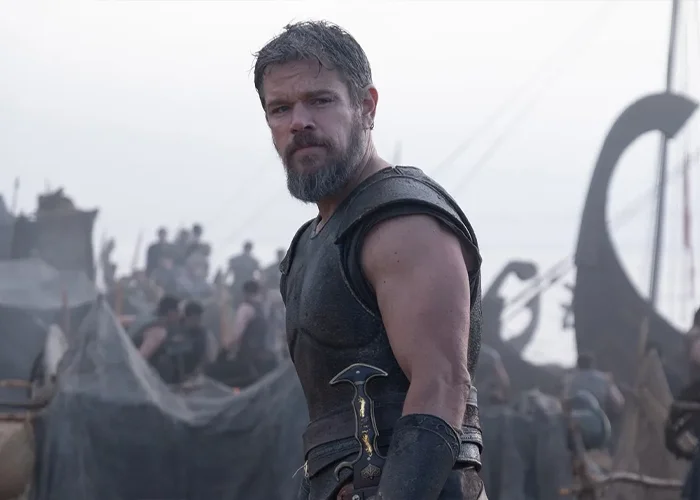
The Odyssey is a journey you enter and physically experience. (That may also be because it’s three hours long. Jury's still out on that one...) But when it ends, the question that stays with you isn’t about the monsters. It’s this: Did Odysseus truly return home, or did he only manage to make it back to where he started?
So, what do you think? Did Nolan give Homer’s epic the adaptation it deserves, or would you rather have seen this story through the eyes of a completely different director? Let’s talk in the comments. Much love, people.