
Digital detox was a concept that made me chuckle the first time I heard it. It sounded like "paying money to put down your phone and go into the woods." Then last summer, on a mountain, I saw a man with nothing in his hands. He was simply sitting and looking.
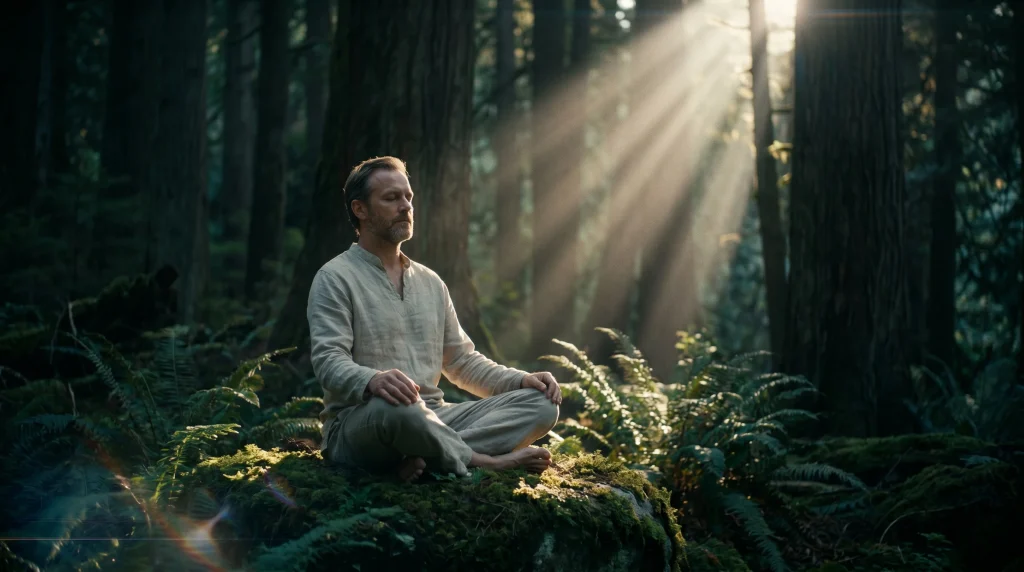
He had an expression on his face unlike anything I had ever seen. Not peaceful, exactly. More like... emptied out. And in that moment I understood why people pay money for this.
What Happens When the Screens Go Dark?
Digital detox, in its simplest definition, means stepping away from your phone, tablet, and computer for a set period of time. But that definition misses the spirit of the thing. Because this is not just about switching off devices. It is about escaping the mental noise created by the state of being constantly connected.
The first thing you feel the moment the connection is cut is not relief. It is the opposite, a kind of panic. You think, "What if an important message comes in? What if I miss something?" That reaction shows how deeply the system has taken root.
Why Has the Silent Holiday Become So Popular?
As of 2026, the concept of the "silent holiday" has become one of the fastest-growing branches of the luxury travel sector. The deep fatigue left behind by the post-pandemic period plays a role in this. People spent years locked to a screen at home, and even when they finally went outside, they could not put their phones down.
But the real trigger is something else: the notification economy. Every platform, every app, is competing to steal your attention. Reports by the World Health Organization drawing attention to rising anxiety and sleep disorders among young people in recent years give concrete shape to the scale of this exhaustion. And at a certain point, a person starts asking: "Is there a place to escape to?"
Digital detox holidays are the answer to that question, an answer with a price tag on it. They do not have to be luxurious. But they are becoming increasingly luxurious.
The Body's Response: The First 48 Hours
The first day is hard. Everyone who says so agrees. You reach into your pocket over and over again, and there is no phone. You see something and want to take a photo, and there is no phone. You get bored and want to scroll through something, and there is no phone.
On the second day, something begins to change. Your surroundings look wider. This is not a metaphor. It genuinely does. Your field of attention expands. You notice the shadow of a tree, you hear the sound of water, you look at the face of the person next to you and you can read the expression on that face.
The third day is an entirely different place. Many people describe the feeling of "coming back to myself" at this point. Like a reset. And they say this feeling is far more real than any spa in a five-star hotel.
Where to Go for a Digital Detox?
It is worth saying that Turkey offers some surprisingly good opportunities in this regard. The silent valleys of Cappadocia, the highland villages of the Black Sea region, the small olive-grove farms of the Aegean coast. All of them are possibilities.
Around the world, the picture has taken on an interesting shape. Scandinavian countries officially support the concept of "forest therapy." In Japan, the practice of shinrin-yoku (forest bathing) is considered part of the healthcare system. These are not empty fads. They are practices that have been researched for a long time and have gained legitimacy.
Meanwhile, small guesthouses and farm hotels operating in truly "no signal" zones are multiplying every year. Instead of apologetically saying "we're sorry, the signal is weak," these places now list that fact at the top of their features. A weak signal is no longer a flaw. It is a selling point.
The Great Paradox: Sharing the Detox
We need to pause here and laugh for a moment. Because the greatest irony of digital detox holidays is this: the vast majority of people share the experience the moment they return. Some even announce beforehand, "I will be offline for X days, I will tell you all about it afterward."
Is this a contradiction? Perhaps. But it is also a deeply human thing. The urge to share a beautiful experience existed long before screens did. It has been this way since our ancestors painted animals on cave walls. The problem is not sharing. The problem is when the anxiety of sharing overtakes the experience itself.
Digital detox reverses that order. Live first, then tell the story. It sounds simple. But in practice it is revolutionary.
Is This Trend Here to Stay?
Asking whether the trend will last is actually asking the wrong question. Digital detox was born as a trend, but it has already evolved into something else: it is becoming a part of personal hygiene.
Just as we do not think of brushing our teeth as a trend, at some point we will stop thinking of regularly stepping away from screens in the same way either. At least, that is what our hopes and observations tell us.
But yes, right now it is still in the trend phase. And the fact that it is in this phase means it is exactly the right time to take an early look at it. We say this often in our Discover articles as well: understanding something before it goes mainstream allows you to build a more honest relationship with it.
It is time to get to know digital detox not through marketing language, but through your own body's response. Put your phone in a drawer. Just for one day. And see what happens.
You will probably get irritated first. Then you will notice something. And you will want to come here and tell us about it. We will be here, waiting.