
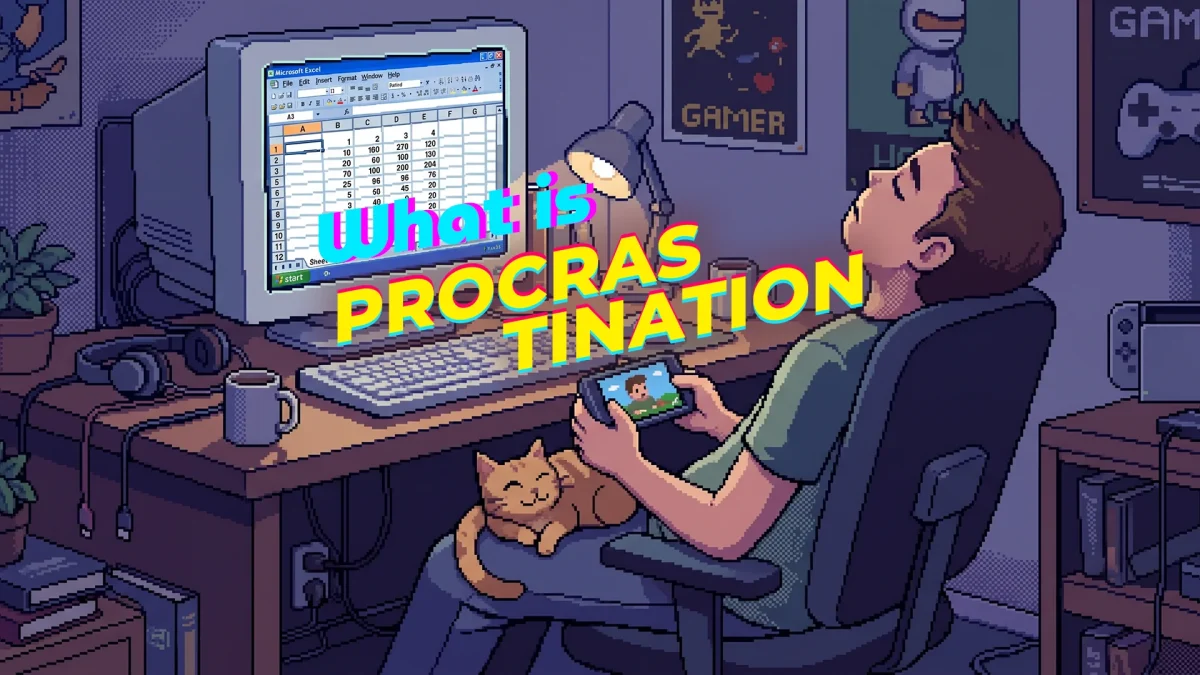

What Is Procrastination?
Hey, I wanted to write a post today. But for some reason, before I even started writing, I did all sorts of different things, a bunch of unnecessary tasks related to myself and my home. Something like this, or something similar, has definitely happened to you at some point. Well, this behavior has a name: if you ask what procrastination is, it translates into Turkish as yapılacakları erteleme, meaning the act of postponing things you need to do.

Students with exams know this all too well: before sitting down to study, that room that has not been tidied in three months suddenly gets cleaned spotlessly. Then the book collection gets organized alphabetically. And only after all that does our dear student finally sit down to study, two hours before the exam. That is exactly what we call procrastination.
Procrastination, that is, the tendency to put off the things we need to do, is something I think most of us experience. The video below explains this topic so beautifully that you will definitely find yourself saying "yes, I do that too" while watching it:
Laziness or Procrastination?
So why do we procrastinate? Is it simply because we are lazy? Well, when you dig a little deeper, a much more interesting picture emerges. Researchers say that procrastination is not the same thing as laziness.
Laziness is the state of not wanting to do anything and remaining completely passive. But procrastination is the opposite: you are actually constantly doing things. You are tidying the room, putting together a playlist, brewing coffee, maybe even washing the dishes on purpose. So you have energy, you are active. You are just not doing that one actual task. That is a subtle but very important distinction. Research from the American Psychological Association supports this as well.
Why Do We Procrastinate?
At the root of it, there is usually an anxiety about the task, or the sense that it feels overwhelming, difficult, or boring. The brain favors short-term comfort over long-term gain. Tidying the room feels far less stressful right now than preparing for an exam, so the brain takes that route.
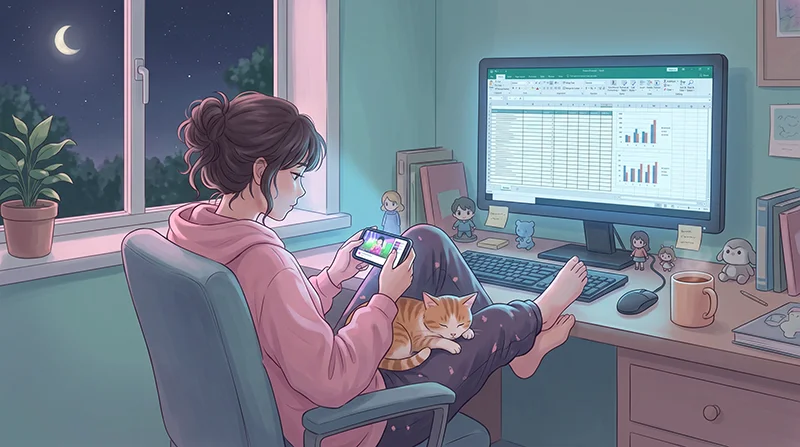
From a psychological standpoint, it is actually quite a logical defense mechanism. But of course, the consequences are not very pleasant most of the time. If you are curious about more posts on psychology and behavior, you can browse the site.
Sounds familiar, does it not? How many times have you said "I will do this tomorrow" and that tomorrow never quite arrived. Take a diet decision, for example: the classic "I am starting on Monday." Or that pile of books waiting to be read. Or that broken faucet you have been meaning to get fixed for months. Procrastination is not just a problem for students or workers. It is a universal condition that seeps into every area of life and touches everyone.
The Zeigarnik Effect: Tasks That Never Leave Your Mind
There is also this: the tasks we put off usually do not leave our heads. The fact that you did not write that article, did not fill out that form, did not make that phone call, stays lodged in the back of your mind constantly. In psychology, this is called the "Zeigarnik Effect."
Unfinished tasks occupy our minds far longer than completed ones. So in reality, finding relief through procrastination is an illusion. That background noise in your head is wearing you out much more than you realize. You can also check out our posts on the brain and science.
Technology Has Made Procrastinating Easier
Technology has certainly made all of this a lot easier too. In the past, you had to be quite creative to procrastinate. Now you have an endless social media feed at your fingertips, thousands of episodes to stream, and notifications coming in at every moment.
Before sitting down to work, you tell yourself "let me just check this one notification," and then you look up and 45 minutes have passed. When there is such an easy escape route available, focusing becomes genuinely much harder. According to Psychology Today, procrastination rates are steadily increasing in the digital age.
So What Should You Do? The 5-Minute Rule
Experts recommend breaking tasks that seem large and intimidating into smaller pieces. Saying "today I will just write the first paragraph of the introduction" feels far less frightening to the brain than saying "I am going to write my thesis."
Also try to convince yourself to just do the first 5 minutes of the task. Most of the time, starting is the hardest part. Once you have begun, continuing usually happens on its own. Some people call this the "5-Minute Rule." Now that you have found the answer to what procrastination is, all that is left is to start with small steps.
Do Not Be Too Hard on Yourself
But there is something else worth saying: do not be too hard on yourself about this. Procrastinating does not make you a bad, unsuccessful, or lazy person. It is something that almost every person experiences to one degree or another.
What matters is becoming aware of this cycle and trying to change it gradually, with small steps. Self-blame, on the other hand, usually amplifies that anxiety and pushes you to procrastinate even more. So approaching yourself with a little compassion is good, both for you and for that to-do list of yours.
Looking at this topic with a sense of humor, like in the video, is actually very healthy. After all, we have all either seen that student "who starts studying two hours before the exam" in someone else, or we have been that student ourselves. It is nice to laugh about it, but at the same time, saying "okay, let me try something a little different now" is even nicer.


