
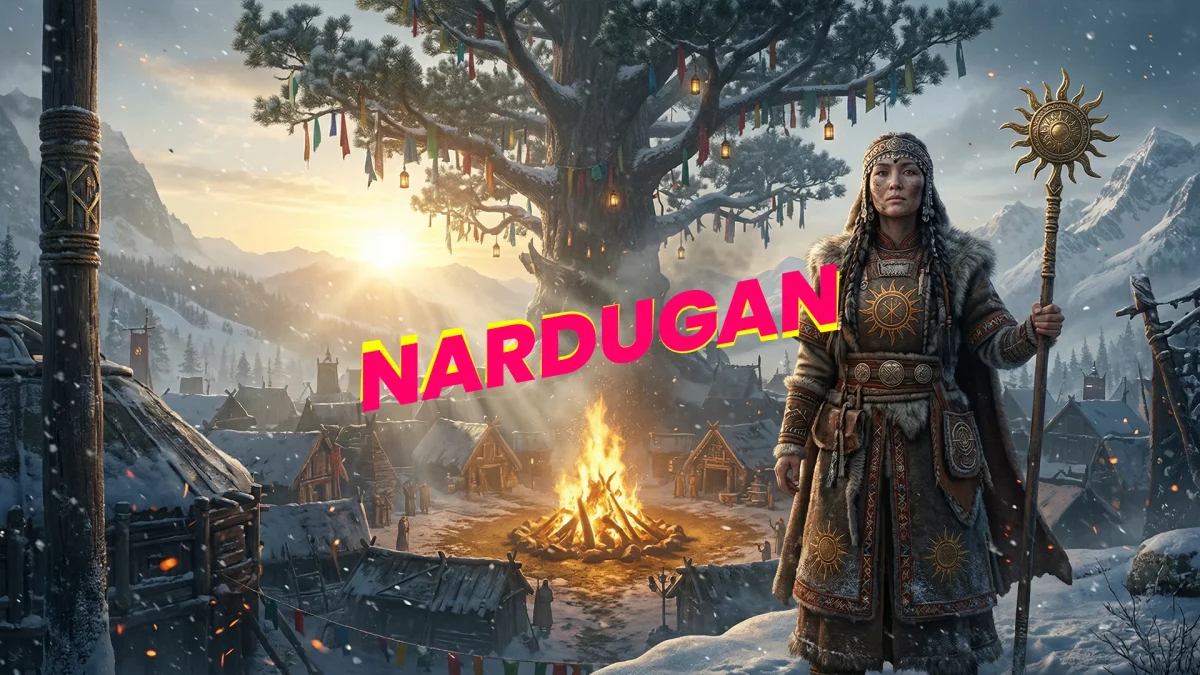

Hello to all Neptunians... One of the most notable features of the period we're in is that it coincides with the Christian holiday of Christmas.
But are you aware of an interesting fact about this? Nardugan, the ancient Turks' solar birth festival, is actually the direct ancestor of Christmas itself. We recommend reading our article carefully, you might gain some wonderful insights!
What Is Nardugan?
The Christmas holiday, which Christians celebrate as the birth of Jesus, is actually the rebirth festival of the ancient Turks. The word Nardugan says exactly that: nar = sun, dugan/tugan = born. In other words, "The Rising Sun."
According to the beliefs of the Turks before they entered monotheistic religions, at the very center of the earth stands a White Pine Tree. They call this the Tree of Life. We can see this tree as a motif in all of our carpets, rugs, and embroideries.
The sun holds great importance for the Turks. According to their beliefs, on December 22nd, the night battles the day. After a long struggle, the day triumphs over the night. It is this victory of the sun — its rebirth — that the Turks celebrate with great festivities beneath the White Pine Tree.
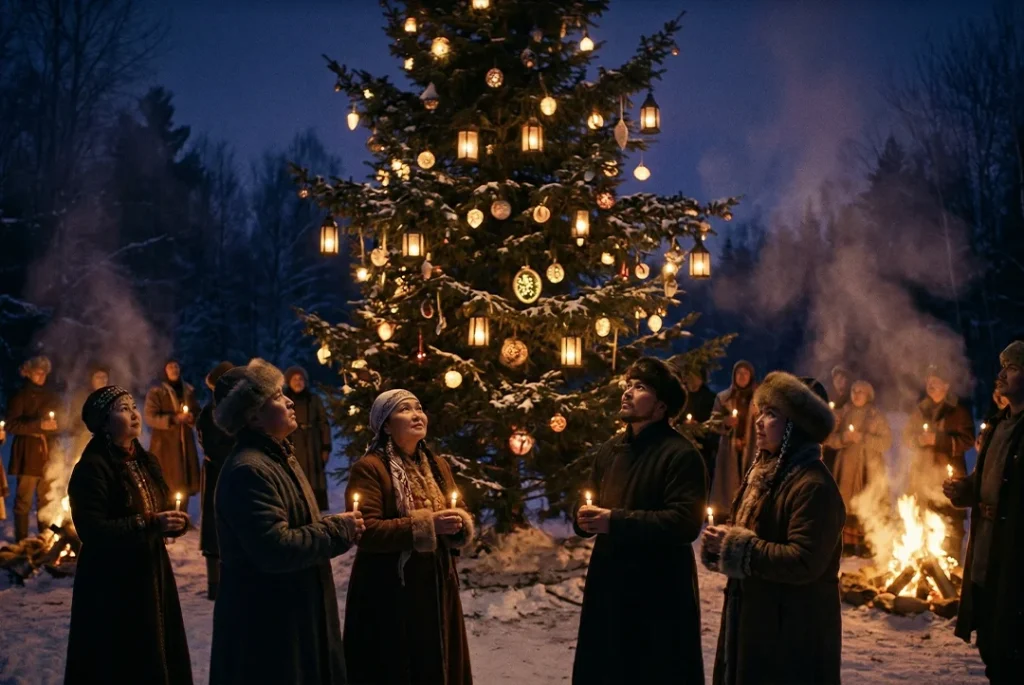
They offer prayers to the god Ülgen for returning the sun. They place gifts beneath the tree, tie ribbons to its branches, and make wishes to God for the coming year. Homes are cleaned, fine clothes are worn, and songs are sung and games are played around the tree.
Elders, grandfathers, and grandmothers are visited; families gather together to eat and drink. Dried and fresh fruits, special foods, and sweets are enjoyed. It is said that if the festival is celebrated with family and friends, life grows longer and good fortune follows.
The White Pine Tree was said to grow only in Central Asia. In Palestine, this tree was unknown. That is why it is said that this tradition passed from the Turks to the Christians — that they adopted it after witnessing it following the arrival of the Huns in Europe. It has nothing to do with the birth of Jesus. "The birth is the rebirth of the sun."
— Sumerologist Muazzez İlmiye Çığ
So What Is the Significance of December 22nd?
This date, which also aligns with the science of astronomy, corresponds to the longest night of the year, the winter solstice. This is the moment when the sun reaches its lowest position on the horizon and daylight hours begin to slowly lengthen from that point onward. You can find more information about the winter solstice through this source.
The ancient Turks observed this astronomical event and embraced it as a sacred turning point. In other words, Nardugan is not a random invention; it is the product of a civilization that observed the sky, nature, and the seasons with great precision.
Just imagine, thousands of years ago, people standing in the middle of the steppes, gazing at the sky, calculating the length of the nights, determining that the sun was returning... It is this wisdom that forms the foundation of Nardugan. Isn't that remarkable?
Who Is the God Ülgen?
In ancient Turkic and Altaic mythology, Ülgen is the supreme deity who resides in the highest tier of the sky and is the embodiment of goodness and light. This divine figure, who stands against darkness and evil, is also known as the owner and protector of the sun.
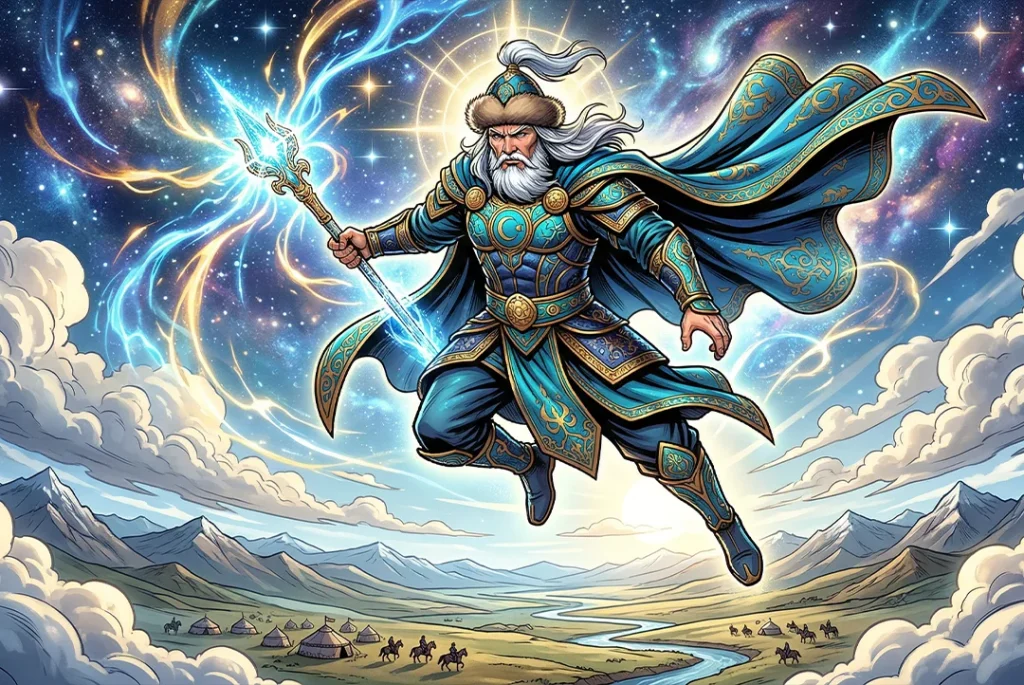 The fact that the rebirth of the sun during the Nardugan festival is seen as a blessing from Ülgen reveals just how deeply rooted this belief is. The prayers offered to Ülgen and the gifts presented to him correspond one-to-one with today's Christmas rituals, giving gifts, decorating trees, and expressing gratitude.
Can you call that a coincidence? If you're curious to learn more about the ancient Turkic belief system and Tengrism, you can also browse our history articles.
The Symbol of Nardugan: The White Pine Tree and the Secret of the Christmas Tree
The White Pine Tree, that is, the pine tree, is one of the rare trees that grows abundantly in the Central Asian steppes and Siberia and remains green even in winter. For the ancient Turks, this tree was a symbol of immortality, resilience, and the continuity of life.
Decorating this tree, which remained green even in the freezing cold of winter, was in a sense an outward expression of the belief in the return of life and the sun.
The pine tree does not grow naturally in the geography of Palestine, this simple yet striking fact alone offers a significant clue. There is also no reference to a Christmas tree anywhere in Christianity's sacred texts.
So where did the tradition of the Christmas tree come from? The answer lies hidden in this ancient tradition carried westward by the Huns and other Turkic-Altaic peoples who reached Europe.
It is believed that during their campaigns deep into Europe in the 4th and 5th centuries AD, the Huns introduced this culture to the peoples of Europe. Over time, the European societies that converted to Christianity blended this tradition with their own beliefs and transformed it into the Christmas celebrations we know today.
The Tree of Life Motif: From Carpets to Tiles
The Tree of Life motif is not limited to the Nardugan tradition alone. This motif appears in Turkish carpets and rugs, Anatolian tiles, woodwork, and even on gravestones.
This tree symbol, with its roots reaching deep into the earth and its branches stretching toward the sky, is seen as a bridge connecting the earth and the heavens, humanity and the universe, the past and the future. In our culture articles, you can also find wonderful content about other symbols in Turkish art.
Tracing the path of this motif, from Central Asia to Anatolia, to the Balkans, and then to Europe, also reveals just how vast a geography Turkish culture has spread across. The next time you look at a "tree" motif on a carpet in your home, you may just recall this thousands-of-years-old story...
Muazzez İlmiye Çığ and the Source of This Knowledge
The name behind sharing this valuable information with us is Muazzez İlmiye Çığ, one of the most important scholars Turkey has ever produced. Born in 1914 and having lived a life spanning over 100 years, Çığ is a Sumerologist recognized on the international stage for her work on Sumerian tablets.

For years, Çığ researched ancient Turkic beliefs, the Sumerian civilization, and their interconnections, boldly bringing to light cultural bridges that many academics had overlooked.
The finding that Nardugan is the ancestor of Christmas is itself a product of her extensive research. You can click here for more information about Muazzez İlmiye Çığ.
In Conclusion...
As you can see, behind the pine trees decorated every December, the gifts exchanged, the families gathering together, and the nights filled with wishes, lies a far older and far deeper story.
This is the story of the ancient Turks who waited for the sun in the middle of the steppes, prayed to the sky, and believed in the continuity of life. Nardugan is the quiet ancestor of a tradition celebrated across the four corners of the world thousands of years later.
Perhaps this December, as you look at a pine tree, this thought will pass through your mind: "This is actually our Nardugan..." Sharing knowledge is multiplying it. Share this article with your loved ones too!